Lost your job? Start here: your 72-hour plan and daily system
This guide is designed to get you stable, organized, and back in the market fast. It includes what to do today, what to do this week, and the daily workflow that wins in a market where speed and volume matter.
WAIT! Listen to this podcast rather reading
The core reality (read this once)
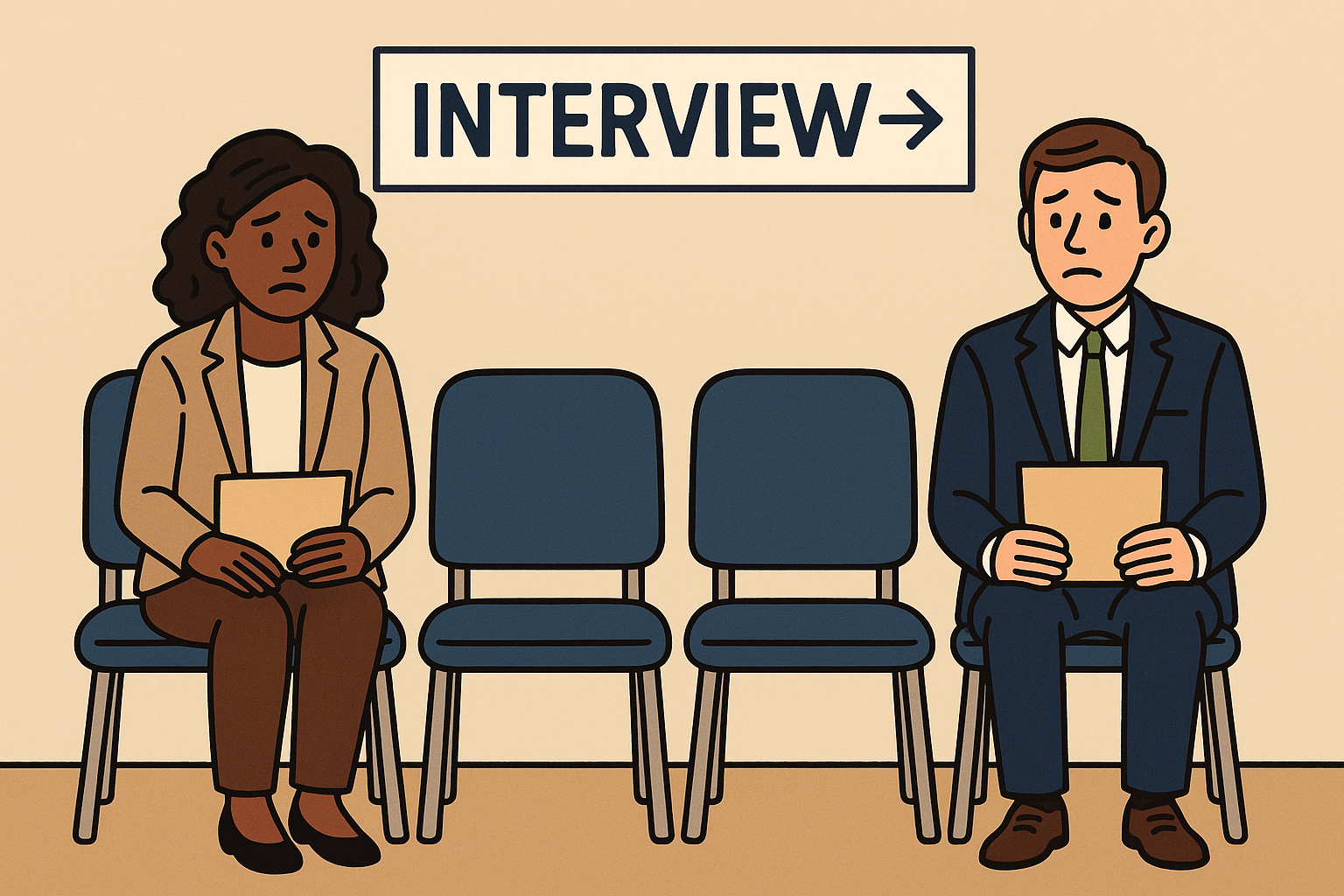
It will take ~3 weeks before you can expect your first response to an application.
The odds of getting a screening call from an application are typically 1% to 2%.
Final rounds often include 4 to 5 candidates, not 2 to 3 like in years past.
From screening call to offer is often around 60 days. From application to first paycheck - 100 days.
Speed matters. Apply daily and focus on new postings from the last 24 hours.
These numbers are here for one reason: to keep you from panicking when silence shows up early. Silence is normal. Your job is to run a system.

Step 1: Lock down your money and benefits
Do this first. It reduces stress and prevents mistakes.
Today
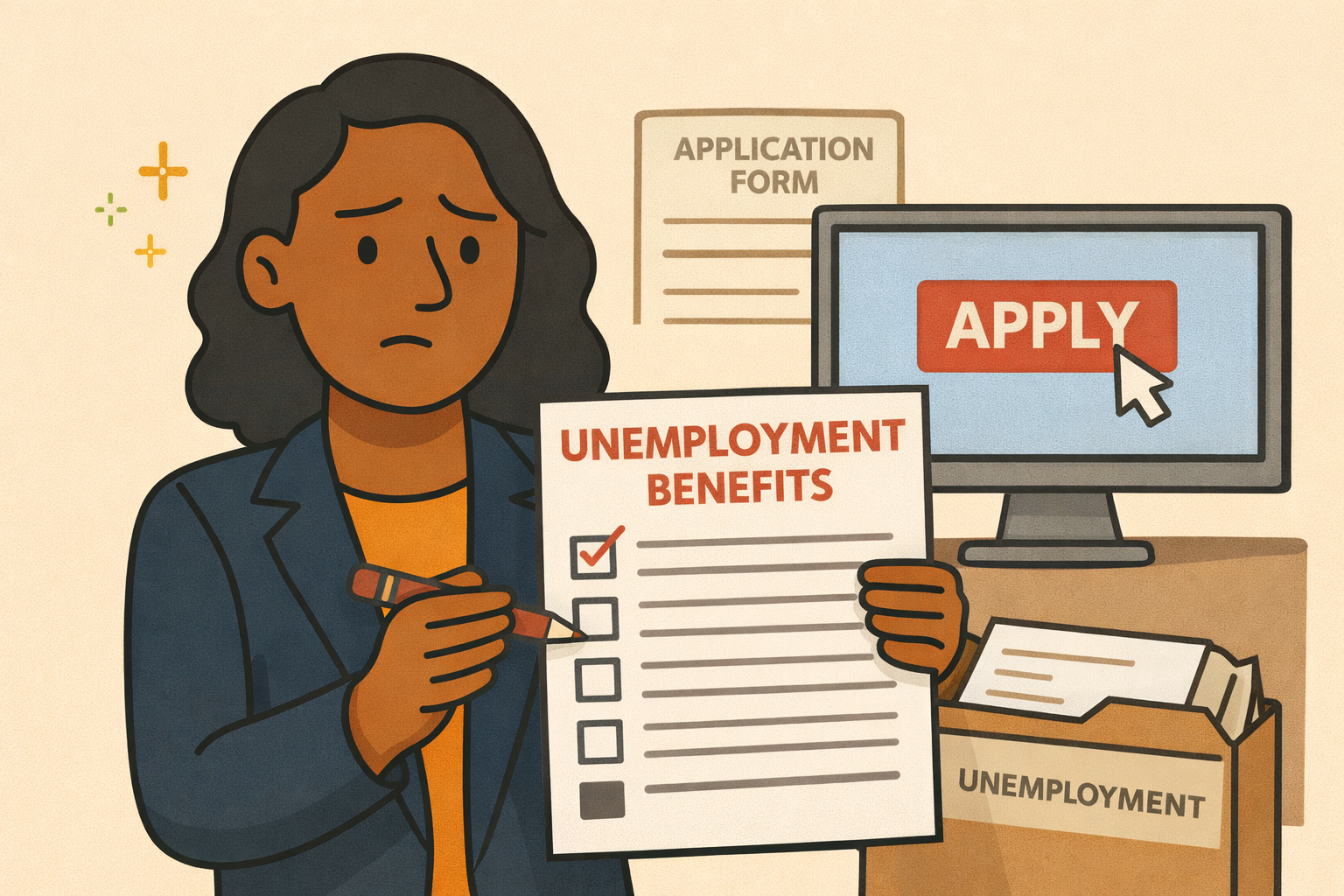
File for unemployment insurance (as soon as eligible)
Confirm health insurance coverage and deadlines (COBRA, spouse plan, marketplace)
Calculate runway: monthly essentials, severance timing, savings
Save proof: termination notice, severance agreement, dates, any relevant emails
Why this matters
If you file for unemployment, you may be asked to show proof of your job search activity later. Step 6 covers how to track it cleanly.
Step 2: Extract proof from your last job, then set yourself up for next time
Right now: download your proof
Before access disappears or details fade, capture:
Performance metrics and dashboards (screenshots are fine)
PRDs, decks, launch notes, strategy docs, retros
Outcomes: revenue impact, conversion, retention, cost savings, cycle time improvements, adoption, ticket reduction
Performance reviews, peer feedback, customer quotes
Next time: never scramble again
When you land your next role, start a brag file from day one. A tool like Bragboard.work can help you log wins and metrics continuously so your resume and interview stories are stronger the next time you are in market.
Step 3: Build a strong resume fast, then refine with tools
Most seekers spend 40 to 60 hours polishing a resume before they start applying, which reduces motivation and slows momentum.
The better approach is to start with a solid baseline, then iterate.
The workflow
Update your resume baseline
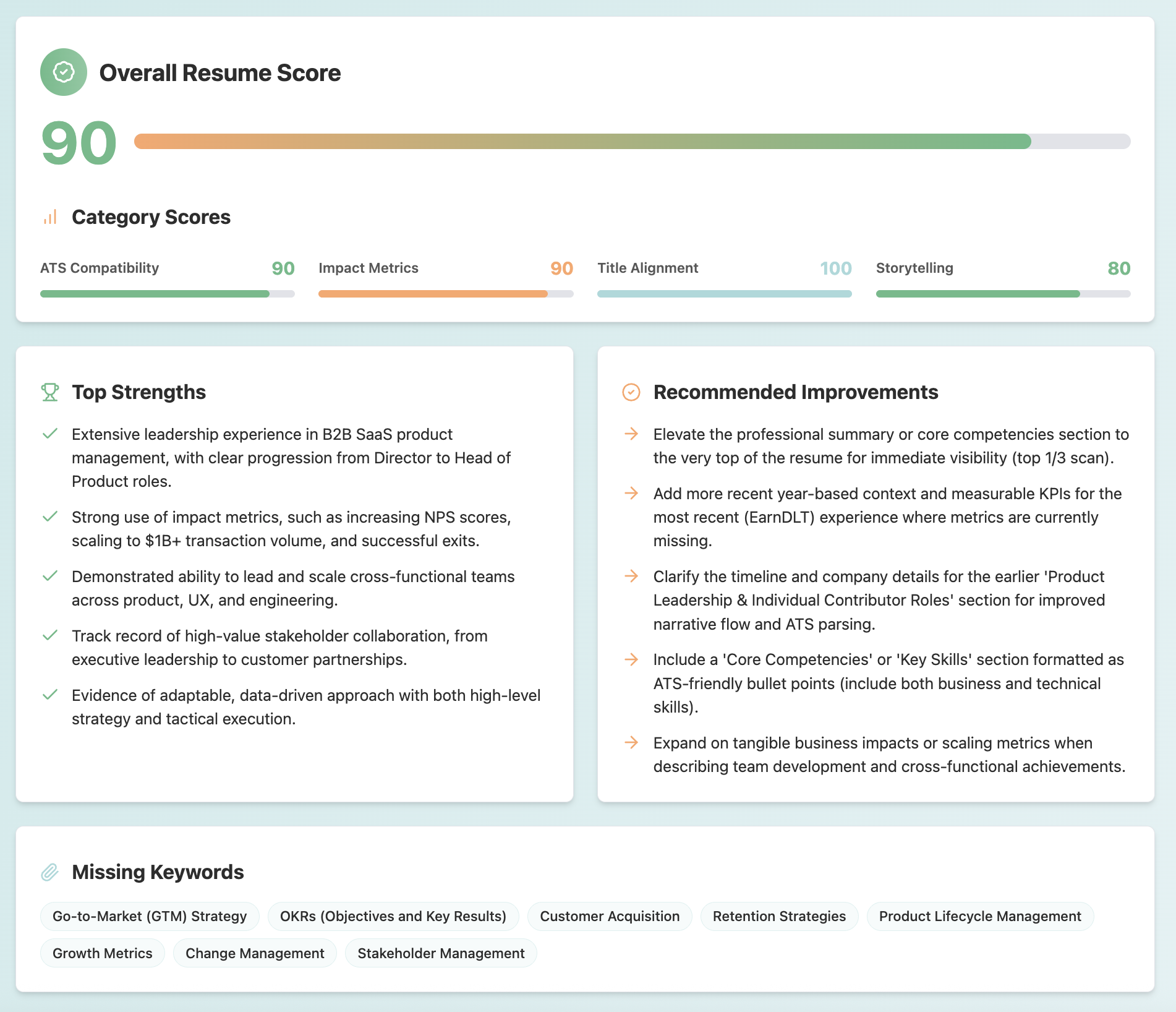
Run it through the Applica Resume Analyzer
Fix the top issues (clarity, keywords, formatting, missing proof)
Repeat until it is clean and consistent
Resume guardrails
Do not over-iterate daily. Run one version for a couple weeks, then make a small set of changes and run that version for a couple weeks.
Go easy on graphics, colors, and heavy design. Many ATS parsing flows struggle with this.
A human-generated resume is still preferred and peer review still matters.
Step 4: Update LinkedIn and notify your network
Once your resume baseline is solid, align LinkedIn to match.
Update:
Headline (target titles and outcomes)
About section (your positioning in plain English)
Experience bullets (proof, metrics, scope)
Why this matters: recruiters and hiring managers cross-check. Consistency builds trust.
Notify your network (you are ready now)
Your network is the fastest path to interviews. Send a short message that is clear and specific.
What to include
2 to 3 target titles
1 to 2 target domains (industry or problem space)
A concrete ask: intros to hiring managers, referrals, active openings
Copy and paste: network announcement
I was impacted by a role change and I am starting my job search.
I am targeting [Title 1], [Title 2], [Title 3] roles, ideally in [domain or industry]. If you know a team hiring, I would appreciate any leads or introductions.
Thank you.
Step 5: Apply every 24 hours because postings disappear fast
Many roles are live only a few days. Your system needs daily execution.
The daily workflow (45 to 60 minutes)
Search roles posted in the last 24 hours
Apply to the best-fit roles
Make the daily workflow easier
Prep for the top four ATS platforms: Greenhouse, Lever, Workday, Ashby
Use hiring.cafe to filter out time-consuming applications
Use App Booster to keep momentum when motivation drops
A. Analyze the job description against your resume before you submit
Speed matters, but so does basic alignment. Use Applica to compare a job description to your resume so you can see:
Keyword gaps
Missing proof areas
What to tailor lightly, and what to leave alone
These tools are available in the Applica app and in the Chrome Extension (beta).
B. Stop self-disqualifying
Requirements are inflated. A robot is often screening first. The advice is simple: go for it.
C. Tailoring is not always the answer
Tailoring can slow you down and make rejection sting more because you get emotionally attached to a specific posting. Instead:
Build a strong “90% resume” which you can use for most jobs
Create 2 to 3 variants for specific which are more difficult to break into like: healthcare, cybersecurity, fintech
Use tools to assist, like the Applica Analyzer
Step 6: Tracking is more important than you think (unemployment proof and sanity)
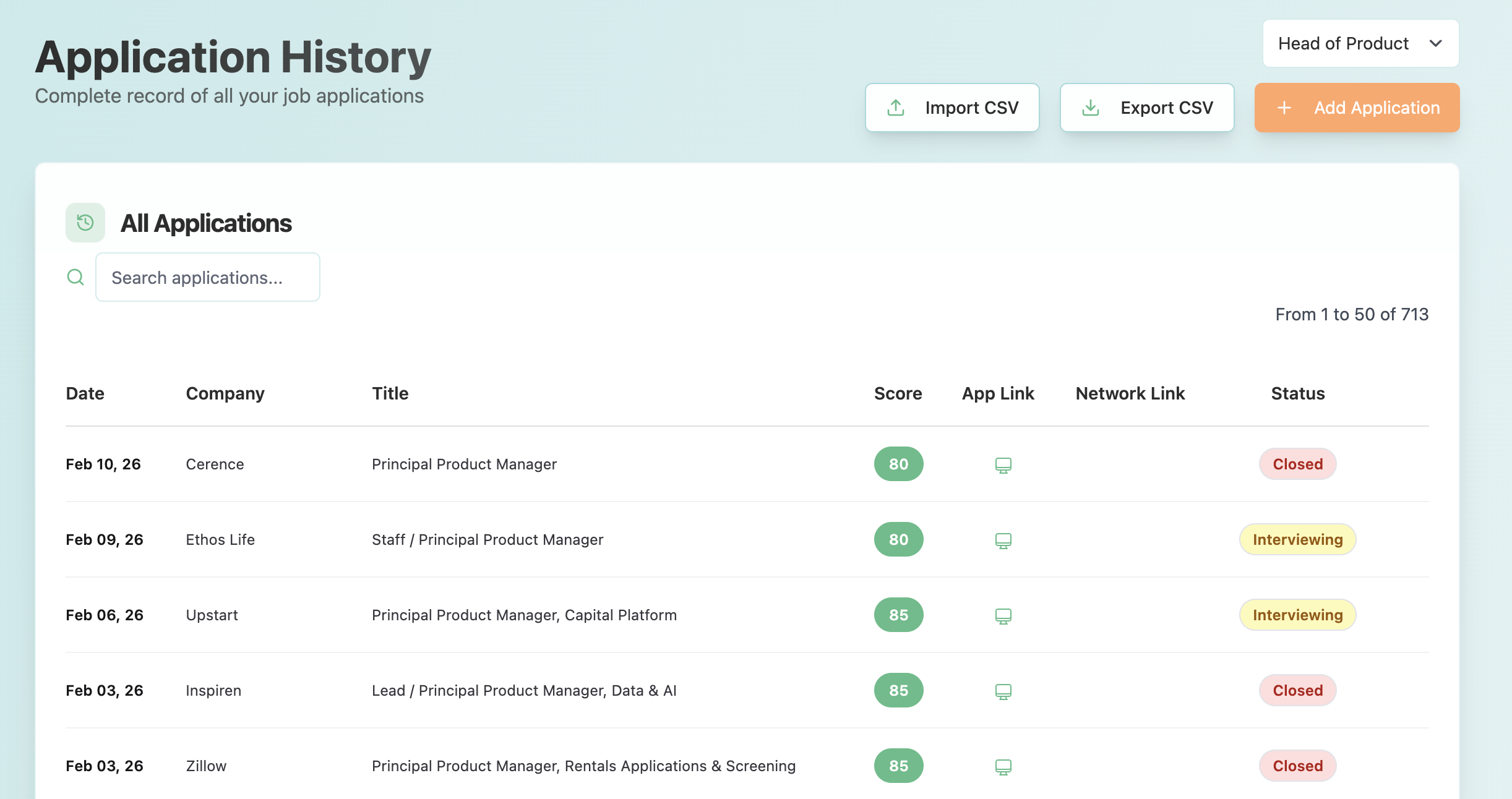
If you file for unemployment insurance, you may need proof of job search activity. Build your proof pack as you go.
What to track every time
Date applied
Company, role, link
Source (board, referral, recruiter)
Resume version used
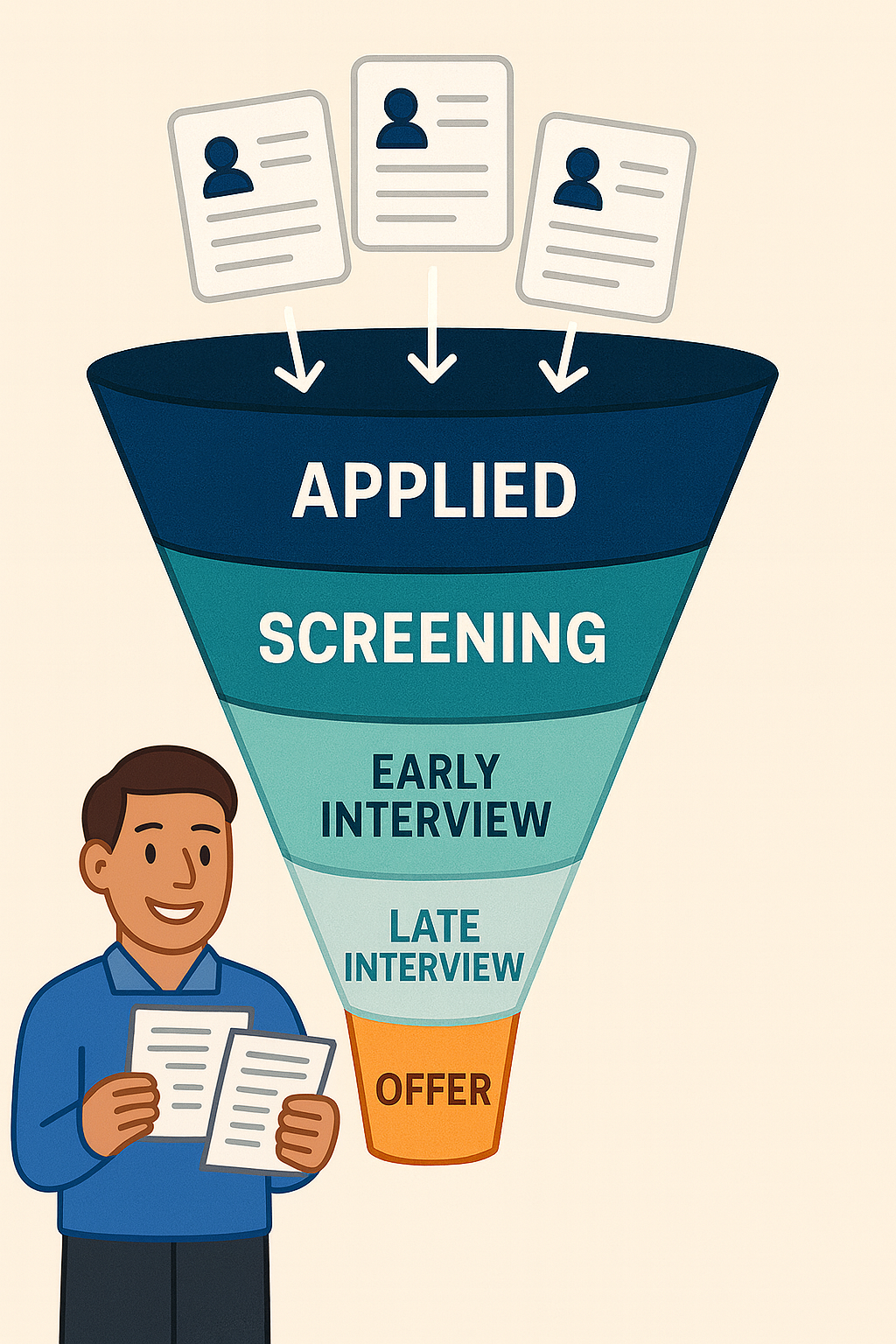
Stage (applied, screen, panel, final, offer, rejected)
Follow-up date and notes
Why tracking matters beyond unemployment
It reduces the feeling that nothing is happening
It lets you adjust strategy based on results instead of guessing
Applica can help you track and export this proof so you are not scrambling later.
CTA: Track my job search with Applica
Volume targets and expectations (how to avoid the biggest mistake)
Research shows seekers spend about 3.25 hours/day but only apply to 1.47 jobs/day.
In a competitive market, many people are simply not applying enough.
A practical stretch target is 7+ applications per day (with sane filters and a system).
If that sounds impossible, that is exactly why App Booster exists.
Step 7: Job interviewing, how to win the process without burning out
What to expect
Most strong candidates go through multiple rounds. Plan for 5+ interviews for senior IC roles and 6+ for leadership roles.
The full cycle can take weeks to months. A slow process is normal, not a signal you are failing.
The #1 rule: do not stop applying
A common mistake is pausing applications once interviews start. Do not do that. Keep your pipeline moving so one process does not control your outcome.
Your interviewing system (simple and repeatable)
1) Build stories (before your first screen)
Write 8 to 10 stories you can reuse:
3 delivery stories (shipped, executed, handled ambiguity)
3 impact stories (revenue, retention, efficiency, customer outcomes)
2 conflict stories (hard stakeholders, tradeoffs, org tension)
2 leadership stories (hiring, coaching, influence, setting direction)
Each story should include: context, your role, what you did, the measurable outcome.
2) Prep for every call the same way (45 minutes)
10 minutes: reread the job description and highlight what they care about
15 minutes: map your story bank to those requirements
10 minutes: research the company and the interviewer (product, customers, recent news)
10 minutes: write 6 questions you will ask (do not wing this)
3) Capture notes immediately after each call (10 minutes)
Write down:
Who you met, what mattered to them, what you promised to follow up on
Objections you heard
What you would answer differently next time
Next step and timing
Use a transcription tool so you do not lose signal
Recording and transcribing helps you synthesize what happened and show up sharper in later rounds.
Granola.ai is a good option for this, especially if you are juggling multiple companies.
Follow-up that actually helps
Send a short follow-up within 24 hours:
2 to 3 bullets on what you heard matters most
2 bullets mapping your experience to those needs
1 crisp question about next steps
If you want, I can also write the exact templates for recruiter screens, hiring manager rounds, and product case interviews in the same voice as the rest of the page.